| View this email in your web browser | ||||
 |
||||
|
The world has changed in many ways over the past five years. For startup food co-ops, these changes have meant higher costs for construction and equipment, alongside higher cost of debt, continued supply chain consolidation, and a General Manager (GM) crisis - with fewer capable, seasoned managers available to do the job. And access to fresh food has continued to erode in many communities, especially historically redlined and rural communities. At Food Co-op Initiative, we have taken these changes as a call to action to develop resources that support smaller, more nimble starting points for developing food co-ops, beginning with what we’re calling a Start Small, Stay Strong Pro Forma Project. In partnership with Sarah Lebherz, pro forma development specialist with Columinate, we will:
Our hope is that we bring together best practices from the small, urban and rural grocery system in a financial model that is easier to fund and operate for less experienced managers. The initial goal will be a Start Small, Stay Strong Sources & Uses Template to complement the existing template available on the FCI website. If you want to learn more, contact me at chris@fci.coop.
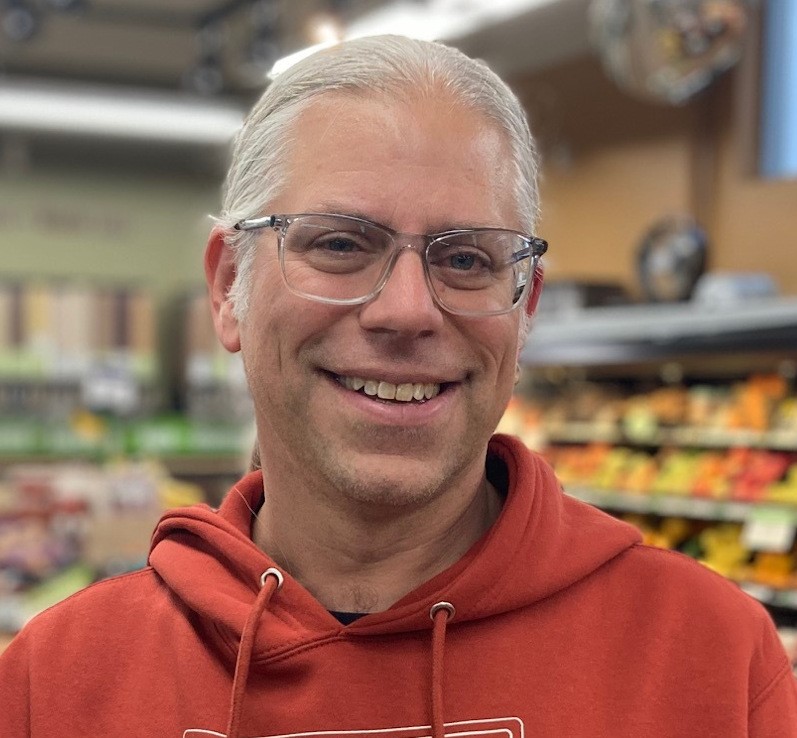
In cooperation, Chris Dilley |
||||
startup accomplishments |
||||
|
Stage 1: Indigo Basket Community Market (Camden, SC) kicked off organizing mid-year 2025, has set up a steering committee, articulated their vision and mission, incorporated, completed a survey with over 800 participants, and recently completed a preliminary market assessment to right-size their store within a local development. Stage 2: One Community Grocery Co-op (St. Petersburg, FL) started 2026 with more than twice as many members as last year, and received a $50,000 grant from the City Council to support their business planning costs. Stage 3: Free Range Food Co-op (Grand Rapids, MN) surpassed $1M in member investment! With 28% of members-owners investing so far, putting them two-thirds of the way to their capital campaign goal. Stage 4: Caledonia Food Co-op (St. Johnsbury, VT) closed its final funding gap, is in the final stages of hiring their permanent GM, and plans to set an opening date in the coming months. Wasatch Food Co-op (Salt Lake City, UT) has set its opening day for May 20, 2026! Stage 5: Green Top Grocery (Bloomington, IL) empowered an Interim General Manager who clearly outlined turnaround sales goals with an operational plan and great member engagement to support it. They have taken huge strides toward stabilization. Congratulations to Mary O’Meara, their Operations Manager who was recently promoted to General Manager! Conversions: Farmington Food Co-op in Farmington, ME, has been organizing for just about a year, and will be officially taking over the operation of the Better Living Center, a privately owned full service natural foods store founded in 1973. Store Openings! Congratulations to the communities that have worked so hard to bring their community-owned store to life:
Coopiversaries These co-ops are celebrating 1 or more years of being open this month:
Is your food co-op a “3rd wave” food co-op that opened between 1998 and 2024? Did we forget to mention its Coopiversary? Respond to this email so we can add your co-op to our Coopiversary calendar! |
||||
fci events |
||||
|
Don't miss the rest of FCI Live! Only *3* more days left to join us for FCI Live, the FREE online conference for learning best practices for starting, organizing and opening community-owned retail grocery stores. Don't worry if you can't attend any of the talks when they're live. We'll post the recordings on the FCI YouTube channel in April. FCI at other events: Come out and see us and learn with us! Members of the Food Co-op Initiative team will be at these upcoming events:
|
||||
gm burnout survey |
||||
|
Help Tell the Real Story of General Manager (GM) Sustainability in Food Co-ops Note: For this text, ‘GM’ will be the term used when speaking about co-op GMs, CEOs and any top staff positions that report directly to the co-op board. If you have ever been a GM or worked closely with one, you know the role carries a lot. It is not just about operations. It is about people, pressure, expectations and often being the emotional center of the co-op. Burnout in the GM role is still too often treated like a personal issue instead of something shaped by how our co-ops are structured and supported. This survey was created to learn directly from the people who have lived or are living the role. It is not being conducted on behalf of any organization. The responses will be used to create resources that better support GMs and to share real experiences that The goal is to move the conversation from what is wrong with the GM to what needs to change around the GM and the GM role overall. All responses from the survey are anonymous and are not being conducted on behalf of any organization. Results will The survey results are expected to be released by the end of this year and will first be shared via Garlic and Roses, Food Co-op Initiative (FCI) and other entities offering co-op’s access to information that is not solely bound to paywalls. Raw data will not be shared. If you are a current, former or interim GM, your voice matters. Your experience can help shape better support systems for the current and next generation of cooperative leaders. Thank you for helping build and rebuild a safer, more honest and sustainable future for co-op leadership. For questions or if you'd prefer to be interviewed instead of completing the survey, contact Gabby Davis at gabriellendavis@gmail.com. |
||||
new resource: framework checklist |
||||
|
The *brand new* Framework Checklist is the highly-requested expansion of the Food Co-op Development Framework Action Guide that provides a step-by-step method of starting a food co-op, organized by Area of Work and Stage. This tool is for food co-ops at any stage of development that are currently organizing. The Checklist is also a great starting point for a brand new co-op effort. It's an essential resource for startup organizers in all stages and co-op professionals that support the development of new startup co-ops. 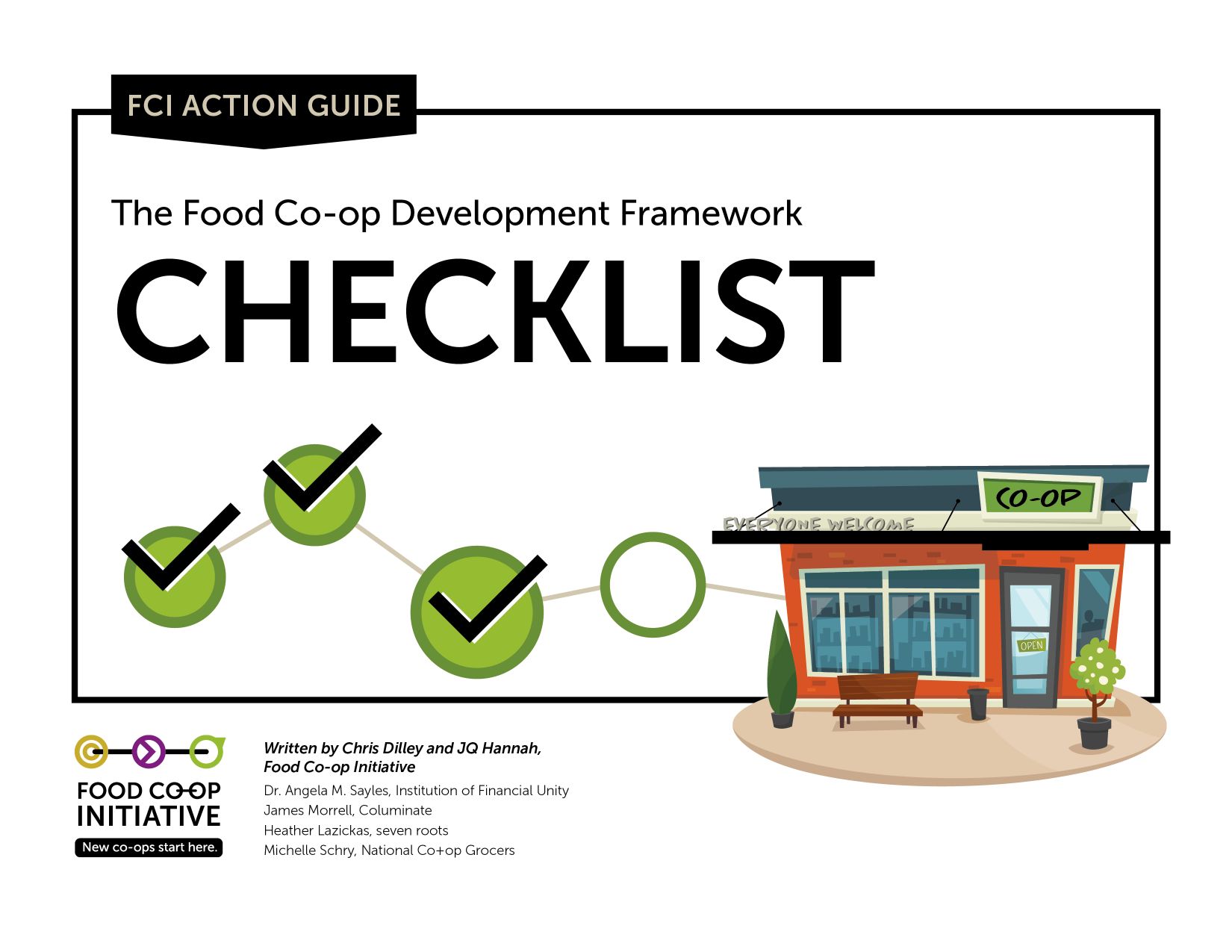
Chris Dilley, FCI’s Director of Startup Support, gave an online training on how to use the Checklist and the recording is available on YouTube. A special thank you to Cooperative Development Foundation (CDF) and National Co+op Grocers (NCG) for making this work possible.
Questions about the Framework Checklist? Respond to this email or send another email to info@fci.coop. |
||||
established food co-ops, you make us possible |
||||
|
Direct, annual donations from open food co-ops across the US are essential to FCI’s work. Last year, donations from open food co-ops were “only” 17.2% of our budget, on paper. But in reality, their donations are the magnetic core that hold our entire FCI world together. We call our open food co-op donors our “Full Circle” donors, because they are co-ops that invest in both the present and the future of our food co-op movement. Their collective donations show larger cooperative organizations that the food co-op movement is passionate about FCI’s work and believes in its startup movement which inspires them to fund this work, too. Thank you to the *record-breaking 60 Full Circle co-ops* that donated to FCI in 2025! Our 2026 Full Circle food co-op campaign begins in May, we hope to see your co-op on the map.
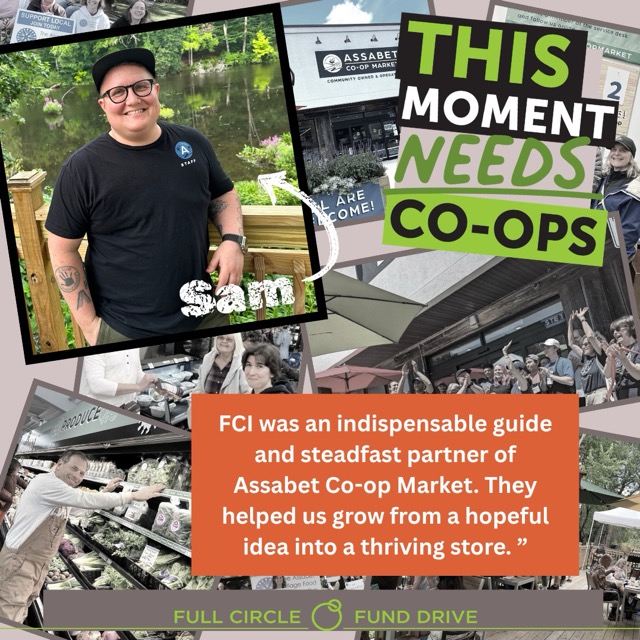
Photo description: Sam McCormick, General Manager at Assabet Co-op Market, says: "FCI was an indispensable guide and steadfast partner of Assabet Co-op Market. They helped us grow from a hopeful idea into a thriving store." |
||||
farm stop conference recap |
||||
|
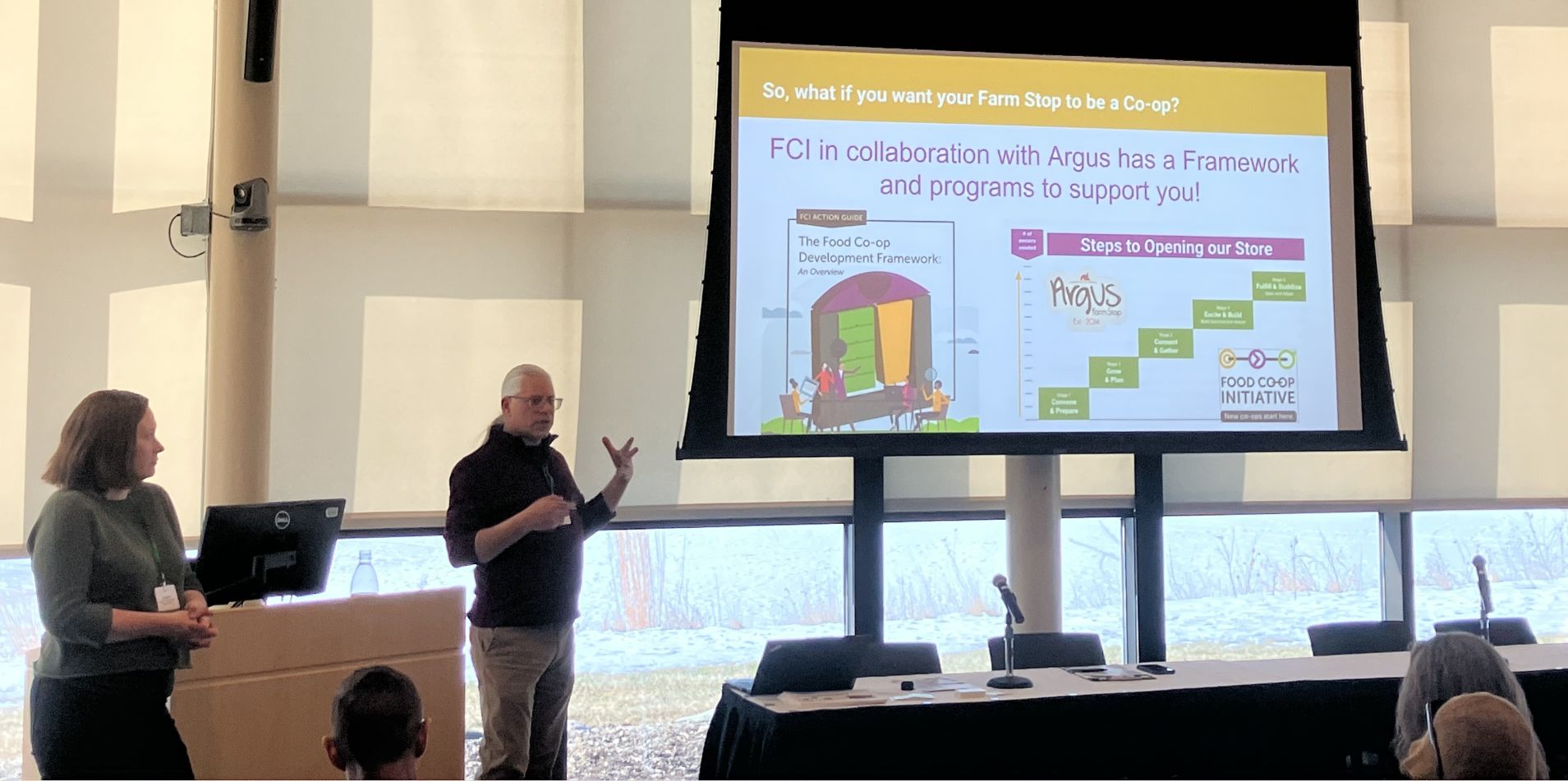
Roughly 250 people from 36 states attended the 2026 Farm Stop Conference in Ann Arbor, Michigan, February 12-14. The conference and farm stop movement are powered by hopes and dreams of better connecting communities to local foods in a way that’s fair for the farmer, consumer, and worker – a dream that has inspired the food co-op movement for decades as well. Over the past year, the idea of a farm stop business concept has begun to take shape amidst some in the startup food co-op movement. For those that are coming to market as a farm stop today, regardless of ownership type, this concept takes the form of a small store, minimal refrigeration and simple shelving that features local products on consignment, and a higher margin offering - often a cafe. Casey Miller, External Training Manager at Argus Farm Stop, and I co-presented on opening a farm stop as a co-op.
During the session, we wove the FCI Food Co-op Development Framework with the educational activities that Argus presents in their Farm Stop School. It paired well with a session on location analysis, in which analyst Dave Huntoon, roughed out ways to estimate if a farm stop could be viable in a community. Huntoon’s analysis breaks it down into both demand factors - what psychographic factors appear tied to farm stop shoppership, and likely the most important for a farm stop - supply factors: are there enough local farms providing enough variety of products enough of the year to fill a small store? This was all fodder for great conversations among farm stops operators, co-op advocates, and grocery business experts. At FCI, these conversations are key to devising ways of better supporting communities that are lacking in fresh food access to better meet that need. Look for more about this work as 2026 progresses. |
||||
|
2801 Hennepin Ave. South
PMB 208 Minneapolis, MN 55408 United States
opt-out of emails from FCI. unsubscribe from the FCI newsletter.
|